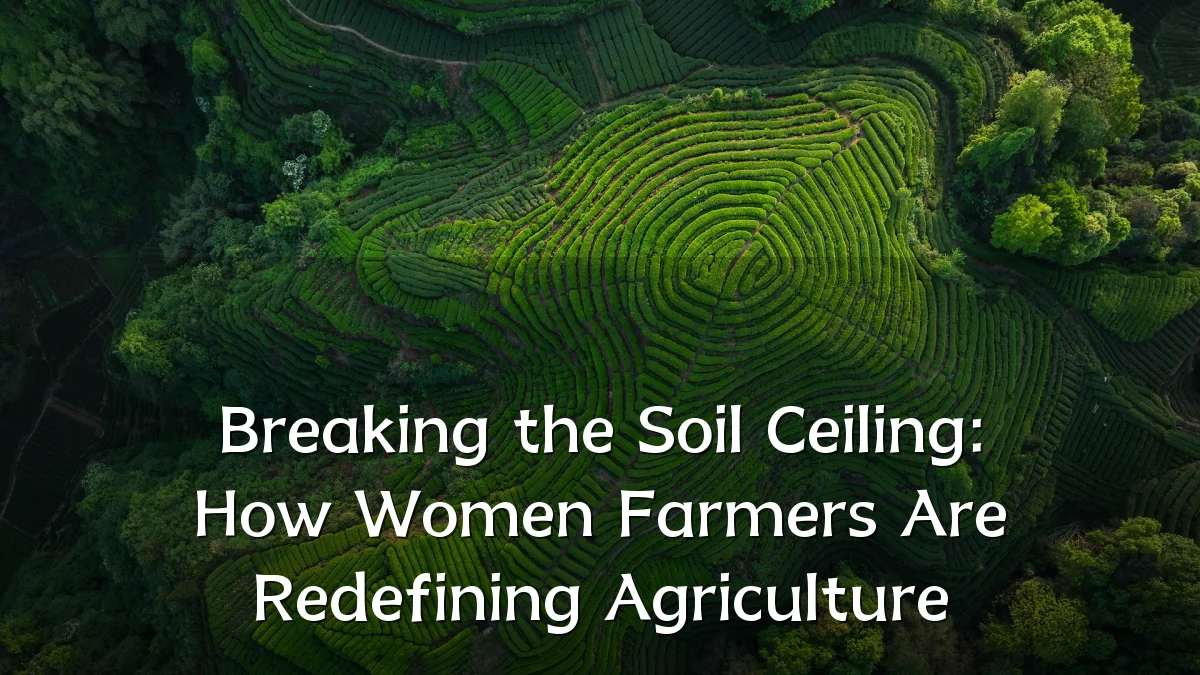
Breaking the Soil Ceiling: How Women Farmers Are Redefining Agriculture
Recent Trends
Across both developed and developing regions, the number of women serving as primary operators or co-decision-makers on farms is steadily increasing. Analysts point to several converging factors: shifting land inheritance patterns, expanded access to microloans and peer networks, and a rise in participation in high-value niche markets such as organic vegetables, artisanal dairy, and direct-to-consumer farm shops. Digital tools—mobile weather alerts, online marketplaces, and remote agronomic advice—are also helping women overcome historical gaps in extension services.

Background
Women have long been the backbone of food production globally, yet they have often been invisible in official statistics and policy frameworks. Cultural norms, limited property rights, and restricted access to credit and large-scale distribution channels have created what many observers describe as a "soil ceiling." Recent shifts in farm succession patterns—more daughters inheriting land or stepping into operations—combined with targeted training programs from non-government organizations, are gradually changing this landscape. The trend is not uniform, but the trajectory is measurable in several key agricultural regions.

User Concerns
- Access to capital: Women farmers repeatedly cite difficulty securing loans of comparable size and terms as their male counterparts, even when collateral is available.
- Land tenure security: In many legal systems, joint titling or sole ownership for women remains inconsistent, affecting long-term investment confidence.
- Time poverty and labor burden: Unpaid care work often falls disproportionately on women, reducing time available for training, equipment maintenance, and market expansion.
- Market entry barriers: Wholesale buyers and supply chains sometimes impose minimum volumes or delivery schedules that are harder for smaller, women-led operations to meet.
These factors feed a perception that the playing field remains tilted, even as official gender-neutral policies proliferate.
Likely Impact
A growing body of extension research suggests that closing the gender gap in agricultural productivity could raise total crop yields on women-managed plots by a significant margin in many low- and middle-income contexts. Greater inclusion also correlates with more diversified cropping systems and a higher likelihood of reinvesting income into household nutrition and children's education. For the broader sector, a more diverse operator pool can improve resilience: women tend to adopt sustainable land management practices at slightly higher rates in certain soil and climate zones, likely due to differing risk tolerances and time horizons.
What to Watch Next
- Policy implementation gaps: Attention will shift from legislation on paper to actual disbursement rates of female-targeted credit lines and land-titling programs.
- Technology adoption patterns: Observers will track whether women are equally able to adopt precision agriculture, drone mapping, and automated irrigation as those tools become more affordable.
- Succession planning norms: The degree to which farming families actively mentor daughters for leadership roles—not just labor—will influence the next generation of operators.
- Supply chain procurement changes: Large retailers and food processors are increasingly publishing diversity metrics for their supplier base; actual procurement shifts will indicate whether the soil ceiling is truly cracking or merely being measured.